Replays, previews, podcasts: The French People’s New Media Consumption Habits
In the July issue of MInsights Le Break, our teams analyzed the new media consumption habits of the French.
These are defined by the transition from passive content consumption to an active, non-linear, and personalized approach. Audiences now choose exactly when and how they consume their content, prioritizing flexibility in timing and a variety of discovery channels.
An in-depth look at on-demand usage patterns that are permanently reshaping consumption journeys in the first quarter of 2026.
What are the new media consumption habits of the French?
Today's users no longer settle for a fixed broadcast broadcast A mode of transmission whereby a transmitter sends the same audio and video stream to many receivers within a coverage area. In the context of computer networks, broadcast mode is contrasted with “multicast” and “unicast” modes, which respectively refer to the transmission of a stream to a given group of recipient devices and to a single recipient device. OR : Putting a show or a programme on television or radio. This term refers to a programme that is broadcast live as opposed to on-demand. Find out more schedule. This structural shift meets a strong demand for flexibility: accessing editorial content whenever it fits best into their daily or weekly routines.
On-Demand TV: The Rise of Previews and Catch-Up TV Catch-Up TV This refers to the TV viewing modes whereby a programme is watched on demand after its live broadcast. See Watch again, Catch-up, Time-shifted viewing. Find out more
Television is undergoing a major shift in viewing habits due to the widespread adoption of catch-up catch-up Catch-up technology allows TV viewers to watch or rewatch a television programme after it has been broadcast live. Find out more and preview preview A way to view a television programme via a catch-up platform before it is broadcast on live TV. Find out more (early access) features. Data Data Digital data Find out more from the first quarter of 2026 confirms that these practices are now firmly rooted in the daily lives of French households.
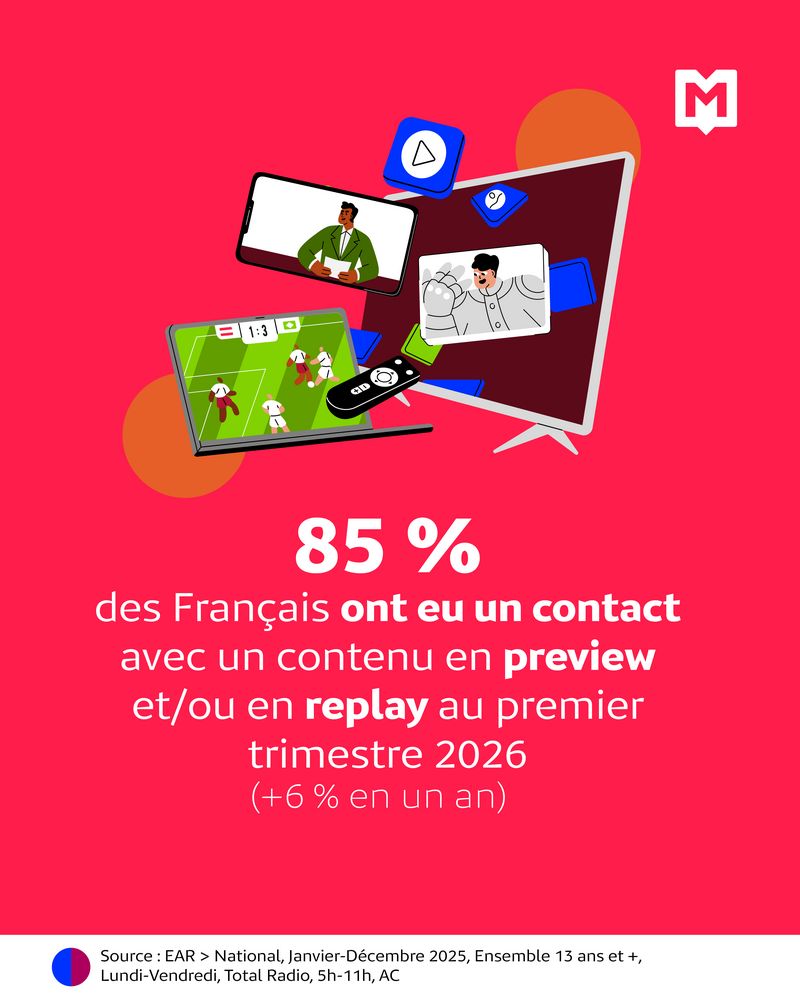
In the first quarter of 2026, 85% of French people came into contact contact In media planning, a contact refers to an individual's exposure to an advertisement. In radio parlance, this is Opportunity to Hear (OTH) and for TV, Internet, press, cinema and poster advertisements, it is called Opportunity to See (OTS). Find out more with preview and/or catch-up content. This indicator shows a steady growth of +6% in one year, proving that on-demand viewing has become a mainstream habit.
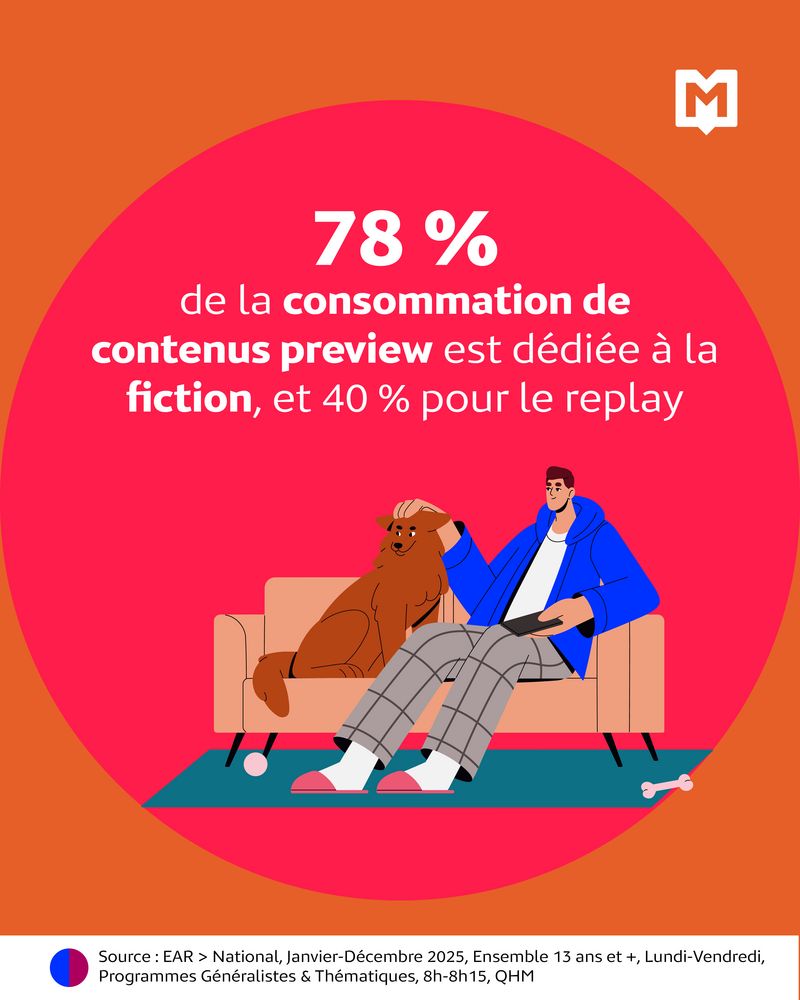
An analysis of program genres reveals that fiction is the primary driver behind these new habits:
- Previews: Fiction accounts for a dominant 78% of total preview consumption.
- Catch-up TV: It remains a core pillar, representing 40% of total catch-up viewing.
Additionally, weekly routines are evolving: weekends have become a key period for on-demand content consumption.
Podcasts: Scaling Up Driven by Digital Platforms
The audio ecosystem is experiencing a major surge, marked by a significant expansion of its national audience audience The set of listeners, viewers, or TV viewers in which each individual is equally weighted, regardless of their listening/viewing duration or frequency of contact. Find out more reach reach Reach is the term used to describe the reach achieved by a medium, publication, advertisement or campaign. It corresponds to the number of users reached and is therefore quantitative data. Reach plays a key role in measuring return on investment. It is used to determine whether or not the communication is effective. Whether for a website or a social network, reach corresponds to the proportion of the Internet user population or the audience reached by the site or network over a set period. Find out more .
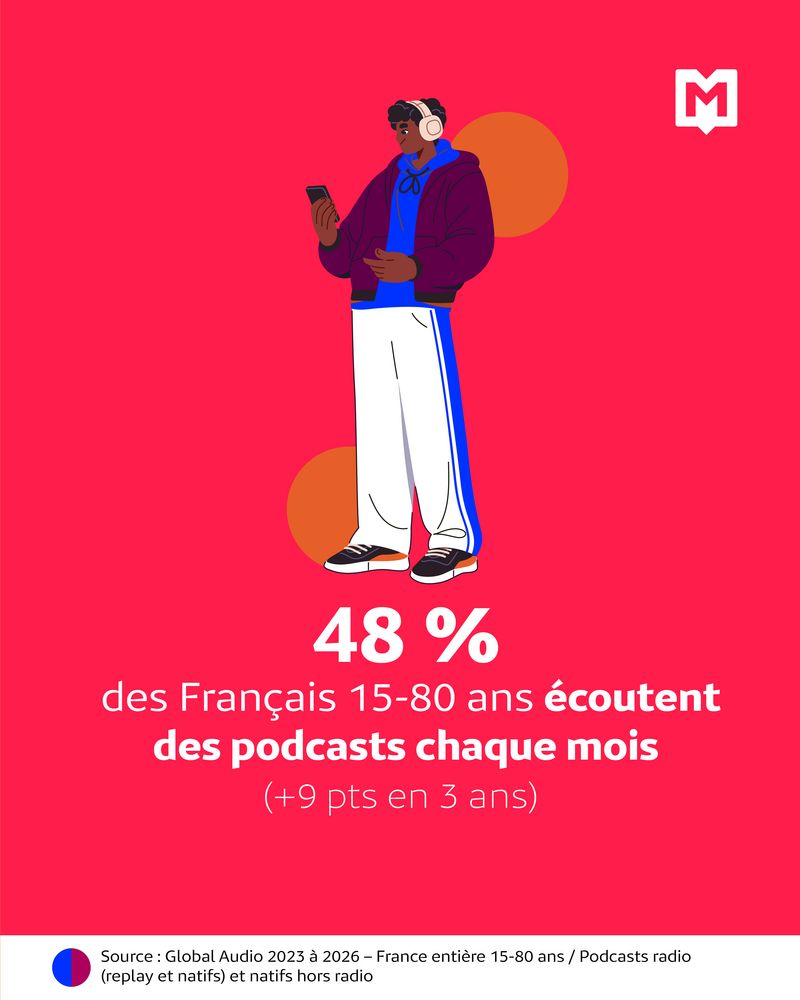
On-demand audio has now been adopted by nearly one out of two citizens. In fact, 48% of French people aged 15 to 80 listen to podcasts every month (including catch-up radio podcasts, native radio podcasts, and non-radio native podcasts). This reach reflects a notable growth of +9 percentage points in 3 years. The strength of this format lies in its ability to capture and maintain listener listener Someone who is listening to a radio station, an aggregate of stations or a coordination; this generic term can also be used for television (however, its preferred term is "TV viewer"). Find out more attention over time.
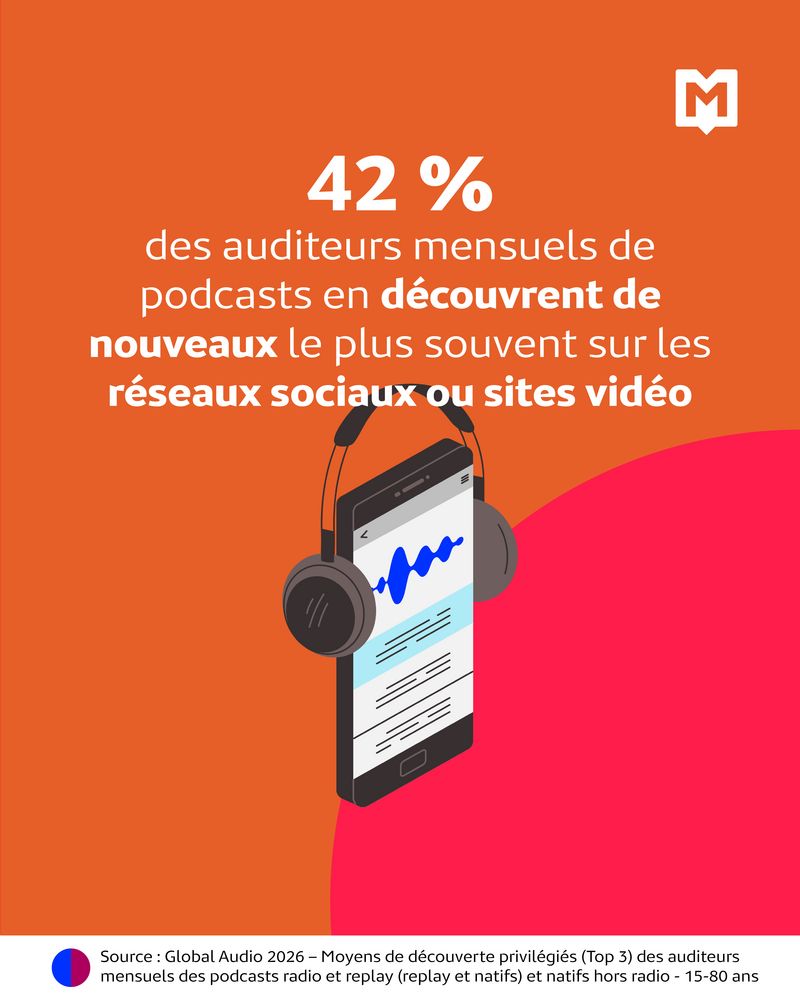
The growth of podcasts also goes hand in hand with new discovery methods. Traditional channels are now supplemented by third-party environments: 42% of monthly listeners discover new podcasts primarily through social media or video platforms.